How to Check Climbing Shoes on Kakobuy
How to Check Climbing Shoes on Kakobuy
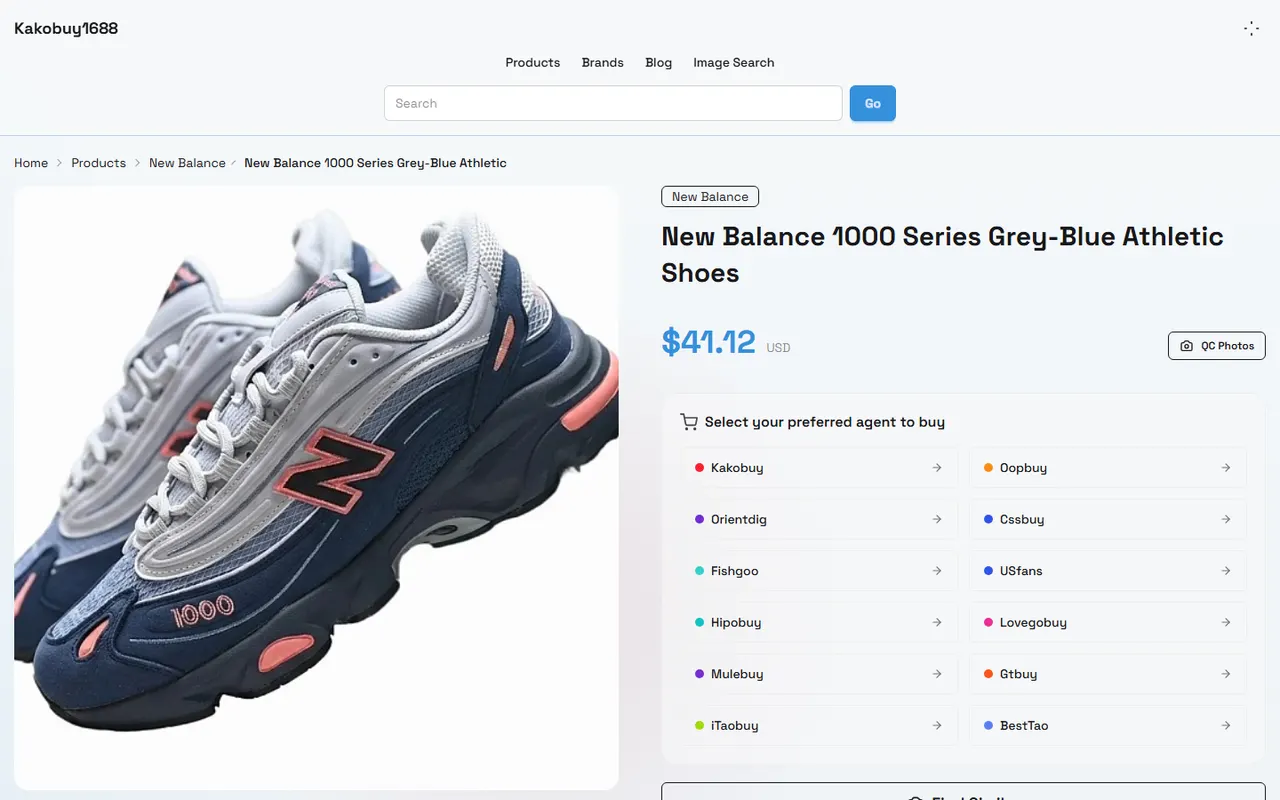
After climbing shoes arrive at the Kakobuy warehouse, the focus of inspection is not to judge whether they can immediately help you climb harder grades, but to confirm that the received item matches the order and product page, and to spot visible manufacturing, shipping, or accessory issues as early as possible.
This guide is for buyers who have already placed an order on kakobuy1688.org and are preparing to review warehouse QC photos, or who have just received their climbing shoes. After reading, you should be able to complete a systematic visual check, keep traceable photo and text records, and decide the next step: keep the item, request additional photos, or contact the platform within the applicable timeframe.
This guide does not substitute for trying on the shoes for fit, real climbing tests, or the consumer protection regulations of the destination country. Warehouse photos alone cannot confirm rubber friction performance, feel, durability, or actual climbing performance.
First, clarify what the arrival inspection is meant to solve
The arrival inspection primarily addresses four questions:
Are the received items the same style, color, size, and quantity as ordered?
Are there visible abnormalities on the sole, upper, collar, and closure parts?
Do the left and right shoes belong to the same model, with matching size markings, structure, and accessories?
If problems are found, is enough evidence collected to support requests for additional photos, customer service confirmation, or return/exchange applications?
Before removing packaging, cutting off tags, or asking the warehouse to handle packaging, it is advisable to first confirm the platform and seller's processing rules. The provided Kakobuy information indicates that the platform's inspection mainly checks the appearance information such as style, quantity, color, size, and model; shoes generally fall within the scope of visual inspection, but special items or items whose packaging, tags, or accessories have been altered may not be eligible for the same return/exchange conditions. Specific deadlines and exceptions should be based on the current order page and customer service confirmation. ⏱️
What can be confirmed with Kakobuy product and QC information
Kakobuy's platform positioning is as a purchasing agent for Chinese goods, freight forwarder, and quality inspection service. The common process is: the buyer submits a product order, the seller ships the item to the Kakobuy warehouse, the warehouse verifies visible product information and provides QC photos, and the buyer decides whether to keep, request after-sales service, or arrange subsequent shipping.
This QC information typically helps confirm:
Whether the item's appearance generally matches the style and color in the order.
Whether there is obvious damage, glue separation, contamination, or deformation on the sole tread, upper, collar, and closure parts.
Whether both left and right shoes have arrived at the warehouse, and whether the size markings are visible.
Whether there is obvious missing shoe box, shoe bag, spare laces, or other accessories clearly listed on the product page.
QC photos cannot automatically prove the item is authentic, nor can they prove that the sole rubber is suitable for a certain type of rock. If the product page involves brands, collaborations, materials, or special technologies, you should still compare the product page, seller information, and warehouse photos item by item, rather than making a decision based on a single overall image.
Inspect the sole, upper, and closure parts in order
To avoid omissions, it is recommended to follow the order of "overall confirmation — sole — upper — closure parts — left/right comparison". First save the original QC photos and order screenshots, then zoom in to examine local areas.
First, look at the overall appearance and quantity
Confirm whether the photos show a complete pair of shoes, not just one shoe or partial angles. Check the shoe shape, color, collar orientation, and quantity, and note whether different colors, different soles, or different batches are mixed in.
If the photo cannot show both left and right shoes at the same time, request an additional overall image containing both shoes. When a complete view is not available, do not interpret "no abnormalities seen" as "it has been confirmed there are no abnormalities".
Next, look at the sole
The sole is one of the most important areas to check on climbing shoes, but warehouse photos can only be used to spot visible problems. Key points to check:
Whether the rubber edges have obvious tears, gaps, bulges, or large areas of glue separation.
Whether the forefoot, heel, and edges of the sole have unusual contamination, sharp foreign objects, or obvious indentations.
Whether the tread pattern, color, curvature, and edge structure of the left and right shoes are basically consistent.
Whether there is a visible gap at the connection between the sole and upper.
Minor production texture, glue traces, or photographic shadows cannot be directly judged as quality issues. You should first request clearer close-up photos, especially of the toe, forefoot edge, and heel connection area.
Inspect the upper and collar
Check the upper for obvious scratches, holes, loose stitching, severe creases, stains, or left/right color differences. For the collar and lining, pay attention to:
Whether there is obvious tearing or large areas of loose stitching.
Whether the collar height and padding structure of the left and right shoes are noticeably different.
Whether the tongue, lining, or labels are obviously missing.
Whether there are hard objects, sharp edges, or unusual protrusions that could affect wearing.
Do not judge the softness, breathability, or durability of leather, fabric, or synthetic materials based solely on photos. Photos can show damage and structural differences, but cannot replace touch and wearing checks.
Inspect the closure parts
Different climbing shoes may use Velcro, laces, slip-on construction, or other closure methods. Check the corresponding parts according to the actual shoe type:
Is the Velcro intact? Is the hook-and-loop surface obviously peeling or severely misaligned?
Are the laces complete? Are the eyelets and attachment points obviously damaged?
Is the elastic area of the collar on slip-on shoes torn or clearly asymmetrical?
Are the closure direction, length, position, and structure of the left and right shoes consistent?
If the warehouse photos do not show the closure parts in an opened state, you can request additional photos. A closure that looks intact does not mean the actual pull force, wearing comfort, or long-term durability has been confirmed. 🔎
Verify left/right shoe style, size markings, and accessories
Left/right consistency should be checked separately. Do not assume two shoes are a pair just because they have the same color.
First, compare the following information with the order and product page:
Brand or product markings.
Model, colorway, or style name.
Left/right foot markings.
Size system and size value.
Product quantity.
Shoe box, shoe bag, spare laces, or other accessories explicitly listed on the page.
Size markings may be located on the tongue, insole, shoe box, or inner side of the shoe. If the markings on the left and right shoes are not in the same location, request separate clear close-up photos and record the text you see, rather than estimating size based on sole length.
Climbing shoe sizing experience is also affected by foot shape, last, closure method, and wearing preference. Warehouse confirmation that the size label is correct does not mean the shoe will fit your foot. The platform's visual inspection also cannot replace actual try-on.
Use a checklist to record visible abnormalities and evidence gaps
During inspection, it is recommended to record "what you see, where you see it, and what supplementary evidence is needed" for each issue. This makes it easier to communicate with customer service and avoids writing assumptions as facts.
Inspection item | Confirmed content | Supplementary evidence still needed |
|---|---|---|
Quantity and overall style | Whether it is a complete pair, and whether the color and style match the order | When a photo showing both left and right shoes together is missing, request an overall image |
Sole | Whether there are visible gaps, glue separation, severe contamination, or left/right differences | Close-up photos of toe, forefoot edge, and heel connection |
Upper and collar | Whether there are holes, loose stitching, severe stains, or structural abnormalities | Detail photos of lining, collar, and side |
Closure parts | Whether Velcro, laces, or slip-on areas are intact | Local photos after opening or fastening |
Size and model | Whether the left and right shoe markings are clear and match each other | Close-up photos of both shoe labels and shoe box labels |
Accessories | Whether accessories explicitly listed on the page are visible | Flat-lay photo of shoe box, shoe bag, and accessories |
When recording, use neutral descriptions, such as "There is a suspected glue separation on the edge of the right shoe toe, need a clearer close-up", and do not write directly "the item is fake" or "it definitely affects climbing". 📝
Which issues should first request additional photos or customer service confirmation
The following situations are suitable for requesting additional photos first, rather than immediately submitting a return/exchange judgment:
Only one shoe is shown, and left/right consistency cannot be checked.
Size, model, or color labels are blurry.
The sole edge is obscured by shadows, packaging, or camera angle.
Glue traces look obvious, but it is impossible to judge whether they exceed normal production traces.
The closure parts are not shown open or fastened.
Accessories listed on the page do not appear in the photos, but there is no clear statement whether they are packaged separately.
The upper has creases, indentations, or slight stains, and it cannot be confirmed whether they are recoverable or affect use.
When submitting a question to customer service, include the necessary part of the order number, the corresponding item, photo location, and a clear description of the problem. Do not disclose full payment card, passport, complete shipping label, or other unnecessary personal information. If screenshots contain address, phone number, or sensitive order information, they should be masked before sending.
Also confirm the applicable after-sales time point. The provided Kakobuy information mentions that some items can be returned or exchanged within a certain period after warehousing, but special items and items whose packaging, tags, or accessories have been removed may be excluded. Such platform rules may change, and the current order page and customer service confirmation should prevail before submission.
What climbing performance cannot be judged from photos alone
Warehouse QC photos are suitable for judging visible appearance, but are insufficient to confirm the following:
Friction performance of the rubber on different rock types.
Actual support feel of the toe on small footholds, slabs, or cracks.
Whether the last fits your foot width, instep, and toe shape.
Pain, numbness, or pressure after wearing for several hours.
Long-term durability of the sole and closure parts.
Whether the product meets the technical performance required for a certain difficulty level.
Therefore, buyers should record "no obvious appearance abnormalities" and "suitable for personal climbing" separately. The former can be verified through photos and labels, while the latter usually requires try-on and use in a safe environment, following local gym, coach, or manufacturer safety recommendations.
Final steps before submitting a return/exchange or keep decision
Before deciding to keep the item, complete the following checks:
Save order information, product page screenshots, original QC photos, and supplementary photos.
Confirm that the left/right shoes, size, color, model, and quantity match the order.
Focus on checking the sole edges, toe, heel, upper, and closure parts.
Number each suspected abnormality separately and keep corresponding photos.
Record the platform or customer service responses regarding after-sales deadlines, exceptions, and handling methods.
Before removing tags, discarding packaging, or requesting the warehouse to alter accessories, confirm whether it will affect after-sales eligibility.
If only key evidence is missing, request additional photos first; if there is clear damage, wrong size, wrong style, or missing parts, submit a processing request according to current rules.
The final decision should not be based on a single good-looking overall photo, but on whether the evidence covers both order consistency and visible quality. For climbing shoes that are acceptable but may not suit your personal foot shape, the keep decision should be based on an acceptable level of sizing risk; for items with clear visible abnormalities that cannot be ruled out by additional photos, contact the platform as soon as possible.
This inspection method may reduce subsequent international shipping costs and waiting time caused by wrong size, wrong style, or obvious appearance defects, but it cannot eliminate the risks of poor fit, performance not meeting expectations, or after-sales being restricted by special rules. It is more suitable for buyers who want to preserve evidence before warehouse shipping and are willing to carefully compare with order information; if you cannot accept sizing issues or cannot bear the cost of subsequent returns/exchanges, you should not rely solely on QC photos to make a keep decision.
Browse our latest products and find your next favorite item.