Kakobuy Climbing Shoes Spreadsheet Guide
Kakobuy Climbing Shoes Spreadsheet Guide
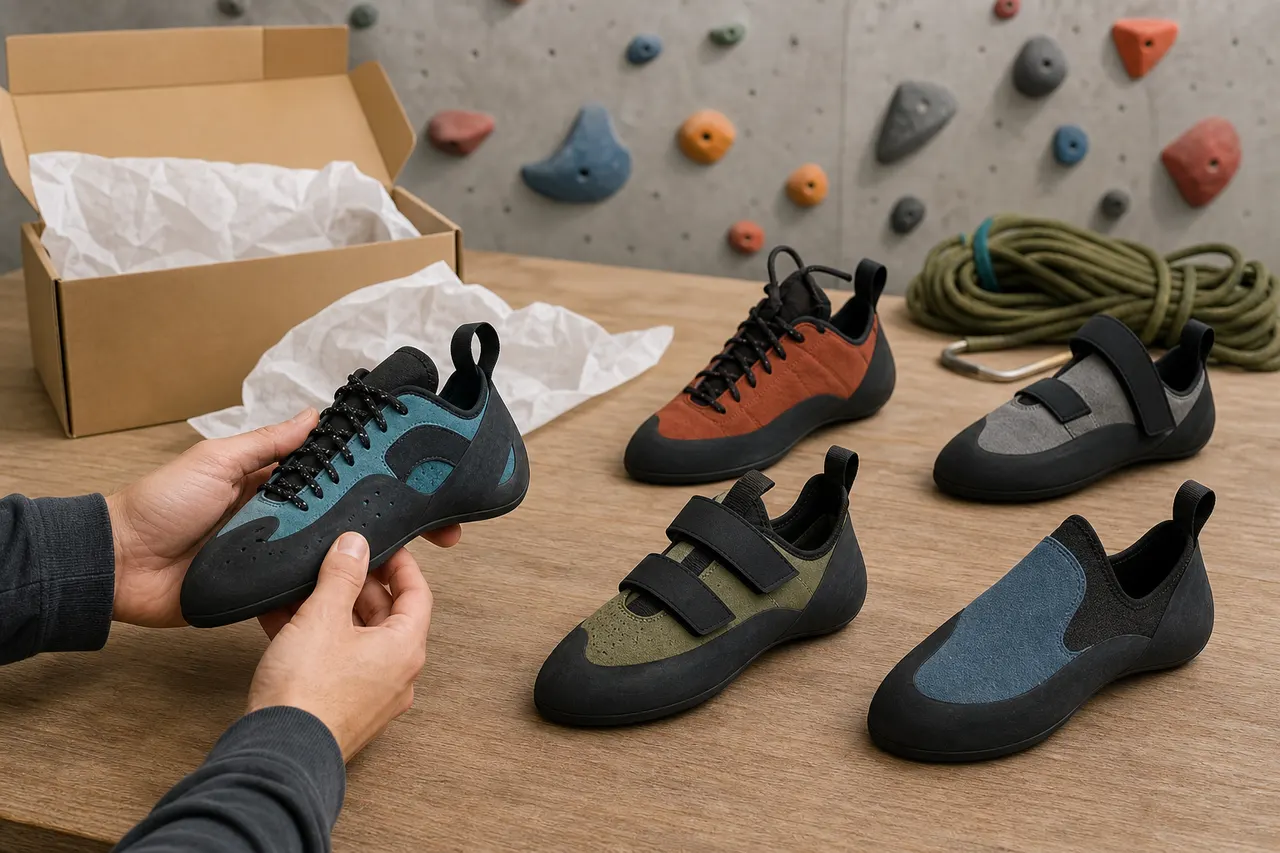
Climbing shoes cannot be selected based solely on appearance, labeled size, or Spreadsheet popularity. The same size can feel significantly different in terms of actual fit due to different lasts, upper materials, and degrees of downturn. When purchasing through Kakobuy, buyers also need to use product page information, seller responses, and QC photos to rule out obvious errors before the warehouse return/exchange window closes.
The specific problem this article aims to solve is: how to narrow down the climbing shoe candidates in the Spreadsheet to a few pairs, and clarify what needs to be verified before ordering and after the items arrive at the warehouse. After reading, you should be able to create an actionable candidate record instead of paying directly based solely on recommendation tags.
This article is not suitable for those who need professional fitting, foot injury adaptation, children's growth size judgment, or competition-level precise shoe selection. If you have bunions, plantar pain, old injuries, etc., you should prioritize in-person fitting and consult qualified professionals.
Information verification baseline date: August 27, 2026. Product prices, inventory, seller policies, Kakobuy fees, shipping routes, and return/exchange conditions may change. Before submitting an order, always refer to the current product page, order page, and platform notifications.
First determine the needs for bouldering, sport climbing, or beginner training
Start by selecting only one primary scenario; otherwise, the filtering criteria may conflict.
Beginner training usually emphasizes comfort, durability, and ease of putting on and taking off. The toe box does not need extreme downturn; toes should remain snug but without sharp pain or noticeable numbness. During long indoor training sessions, overly aggressive lasts can turn practice into pain endurance timing.
Bouldering often involves short bursts of power, heel hooking, and small footholds. Focus on heel cup fit, toe rubber coverage, sole stiffness, and closure stability, but this information must be supported by clear images or seller data, not just marketing terms like "professional model." 🧗
Sport climbing also requires consideration of continuous wear time, foot feel feedback, and whether the shoe loosens during routes. Vertical or friction-type routes have different sole and shoe shape requirements than steep wall routes. Therefore, in your records, specify your common wall types rather than vaguely writing "outdoor" or "advanced."
First write down a selection goal, for example: "For indoor bouldering twice a week, prioritize stable Velcro, moderate downturn, and reliable heel; do not accept high size risk." This sentence will serve as the basis for eliminating candidates later.
What candidate information the Spreadsheet can provide and what it cannot prove
The Spreadsheet is suitable as a discovery tool, helping to centrally record product names, seller links, labeled sizes, images, and prices. It cannot automatically prove that the product is still in stock, sizes are accurate, materials are genuine, sellers are reliable, or that the received item exactly matches the sample images.
After opening a Spreadsheet candidate link, check whether the page is still accessible, whether it has a clear product name, size options, upper and sole images, and enough information to distinguish the specific model. Redirect pages, blank pages, category-only pages, or links that do not correspond to a specific product should not be kept as valid candidates.
Also distinguish three types of information:
Directly recordable information: current price, available colors, labeled size, closure type, and seller display images.
Information requiring seller confirmation: insole length, last width/narrowness, upper material, sole thickness, whether left and right shoes are shipped as a pair.
Information that cannot be proven by page or ordinary warehouse inspection: long-term durability, actual climbing performance, rubber compound performance, and suitability for your feet.
Kakobuy's platform identity is a Chinese purchasing agent, freight forwarder, and warehouse quality inspection service provider. Its value lies in assisting with purchasing, inbound inspection, package consolidation, and international shipping, not in substituting for professional climbing shoe fitting. Warehouse QC can help spot wrong color, wrong size, obvious damage, or left/right mismatch, but cannot replace foot fit testing.
Establish filtering criteria based on foot shape and expected fit
Measure both feet first, rather than directly using your regular athletic shoe size. It is recommended to measure the length and widest forefoot of both feet while standing, after normal foot swelling later in the day, and record the measurement date, sock thickness, and measurement method. Use the longer or wider foot as the risk baseline.
Then record foot shape characteristics: wide or narrow forefoot, high or low instep, narrow heel, and the position of the longest toe. If the seller only provides EU size or standard shoe size, do not convert it yourself into a definite fit conclusion; continue to ask for the insole length, internal length, or brand size basis for the corresponding size.
Expected fit can be divided into three levels:
Comfort fit: toes touch the toe box without significant pressure, suitable for longer training sessions or beginners.
Snug fit: minimal empty space inside the shoe, suitable for buyers with size experience who can tolerate some pressure.
Aggressive fit: high requirements for last and foot shape match, not suitable as a first cross-border purchase when fitting is impossible and return/exchange costs are high.
If a candidate product lacks centimeter-level basis and only has vague descriptions like "recommend going down one size," mark the size risk as high, rather than writing the recommendation directly into your final choice. 📏
Compare the pros and cons of Velcro, laces, and slip-on structures
Velcro structures are quick to put on and take off, suitable for bouldering and indoor training where frequent shoe removal is needed. When filtering, check the number of Velcro straps, direction, stitching, and attachment points. A single strap is convenient but may offer limited adjustment for different insteps; multiple straps usually provide more localized adjustment space, but still need to be judged with the actual last.
Lace-up structures typically offer finer adjustment, suitable for those who want to control forefoot and instep tightness separately. The downside is slower on/off, and the eyelets, laces, and tongue add more areas to inspect. If the product images do not show the complete lacing area, do not assume the structure is reliable based solely on the title.
Slip-on structures are simple, reducing exposed closure parts, and convenient, but fit depends more on elastic materials, instep height, and last. Once the elastic area is too loose or too tight, there is less room for buyer adjustment.
No closure type is absolutely superior. When choosing, return to your primary scenario: if frequent removal, prioritize comparing Velcro; if fine adjustment matters, look at laces; consider slip-on only if you have confirmed size and last experience.
Use a table to record size basis, sole information, and items to confirm
Do not copy the original Spreadsheet descriptions verbatim into your own list. Each field should be distinguished as "visible on page," "seller confirmed," or "not yet confirmed." The table below can be used directly as a filtering template:
Candidate | Primary scenario | Foot shape fit basis | Size basis | Closure type | Sole and upper info | Current price and date | Items to confirm | Risk level |
|---|---|---|---|---|---|---|---|---|
Candidate A | Indoor bouldering | Page says medium forefoot, no width provided | Only EU size, no cm data | Double Velcro | Toe rubber visible in images, material unconfirmed | Fill in order date info | Insole length, left/right size, material | High |
Candidate B | Beginner training | Seller provides last description | Insole length replied, still need to compare with foot length | Laces | Sole thickness pending confirmation | Fill in order date info | Return/exchange conditions, sole specs | Medium |
Candidate C | Sport climbing | No foot shape info | Size chart source unclear | Slip-on | Only side view image | Fill in order date info | Heel, toe, elastic area, and size basis | High |
Prices must record currency and verification date. Platform materials have shown reference conversion values between RMB and target currency, but exchange rates change; when budgeting, use the actual conversion and fees on the payment page, not static conversion values.
Before ordering, check upper, closure parts, and left/right shoe QC photos
Before submitting a purchase order on Kakobuy, save the exact product specifications, including color, size, closure type, and the specific areas you want the warehouse to inspect. The remarks should be brief and observable; do not ask the warehouse to judge whether it is "professional" or "fits."
Suitable QC checks include:
Place left and right shoes in the same frame to confirm style, color, and labeled size match.
Take separate photos of the size labels, toe boxes, heels, and outsoles of both shoes.
Inspect Velcro straps, lace eyelets, elastic areas, and visible stitching for completeness.
Check the upper for obvious separation, damage, heavy stains, or asymmetric deformation.
When platform allows and warehouse can perform, request photos with a size ruler or insole length; if measurement is impossible, keep it as an unconfirmed risk.
Warehouse inspection mainly checks style, quantity, color, size, model, and appearance. It cannot confirm whether the shoes hurt when worn, nor can photos prove rubber performance or long-term durability. After receiving QC photos, zoom in on the same positions of both shoes; do not approve shipping based on one frontal group photo. 🔍
If images are blurry, key angles are missing, or size labels are unreadable, request supplements before the return/exchange processing window closes, rather than waiting until after the international package is sent.
Evaluate size uncertainty, return/exchange limitations, and shipping packaging
The biggest uncertainty in cross-border climbing shoe purchases is usually not the product price, but the size risk from inability to try on. If candidates lack centimeter data, last descriptions, and reliable size basis, even a low price may increase total cost due to returns, repurchasing, and repeated shipping.
Platform materials indicate that some products have a limited return/exchange processing period after warehouse arrival, excluding custom, restricted, and items where packaging or accessories have been removed. Specific time limits, applicable categories, whether the seller accepts returns, and domestic China shipping costs must be reconfirmed on the current order page. Do not request removal of shoe boxes, tags, or accessories before attempting a return/exchange.
Cost evaluation should include at least product price, domestic China shipping, international shipping, possible customs fees, payment or currency exchange costs, and additional costs from returns/exchanges. International shipping fees are usually affected by actual weight, volumetric weight, destination country, and route restrictions, so do not judge final cost based only on shoe price.
Shoe boxes may increase volume and shipping cost but also protect the upper and closure parts. Removing the box may save some volumetric fees but increases risk of compression deformation and insufficient after-sales evidence. A safer approach is to first obtain complete QC and confirm no return/exchange, then compare options such as keeping the shoe box, folding the box, or adding reinforced outer packaging. 📦
For customs clearance, declare truthfully according to destination country rules, and confirm shoe materials, package value, taxes, and import restrictions. This article does not provide methods for under-declaring, splitting orders to avoid taxes, or evading inspections.
Select the models that need further verification from the candidate list
After completing the records, do not immediately choose the model that "looks best." First eliminate candidates with dead links, unclear product identity, insufficient size basis without seller supplement, then check the remaining items one by one.
A workable decision sequence is:
Keep models consistent with your primary climbing scenario.
Prioritize models that provide centimeter-level size basis and clear last information.
Compare whether the closure type suits your instep and usage frequency.
Confirm that page information is sufficient for the warehouse to perform specific QC.
Verify current price, inventory, return/exchange conditions, and estimated international shipping costs.
Finally select only one to three models to ask the seller or platform for more information; do not order many high-risk candidates at once.
The ideal next step is not "buy Candidate A," but "confirm with the seller the insole length, forefoot width basis, and upper material for Candidate A in size 42; if they cannot answer, remove it from the list." This conclusion turns uncertainty into a specific action.
This method does not automatically produce a fixed savings amount. Actual savings may come from avoiding wrong purchases, repeated shipping, and missing return/exchange windows; the added cost is the time spent measuring, inquiring, and reviewing QC. It is more suitable for buyers willing to keep records, accept the purchasing process, and tolerate limited size uncertainty; it is not recommended for those with no climbing shoe fitting experience, needing medical-grade adaptation, or unable to bear return/exchange losses. ✅
This article is generated by the automated editorial process of Panda-Buy Editorial Desk. The editorial role does not represent a real consumer and does not claim to have personally purchased, worn, or tested the products mentioned. Factual items should be re-verified by the buyer before ordering and shipping, based on the current product page, Kakobuy order page, seller responses, and warehouse QC.
Browse our latest products and find your next favorite item.